
- Limitless Standard: Christ's command of "seventy times seven" (Matthew 18:22) establishes an infinite, unquantifiable measure of forgiveness.
- Rabbinic Context: Peter's proposal of forgiving seven times doubled the rabbinic custom, yet Christ demanded a complete reversal of legalistic math.
- Immaculate Nature: As the sinless Lamb of God, Christ cannot commit an injustice; hence, "forgiving Jesus" is a category error.
We often imagine for a moment the profound struggle of a sincere believer, wrestling with deep wounds—perhaps hurt by life’s circumstances, unanswered prayers, or a perceived injustice that seems to contradict God’s lovi...
- Peter’s Question: Trusting God's Word through life's deepest trials and seasons of waiting.
- Seventy Times Seven: Trusting God's Word through life's deepest trials and seasons of waiting.
- The Unblemished Lamb: Trusting God's Word through life's deepest trials and seasons of waiting.
Peter’s Question: The Math of Mercy
We often imagine for a moment the profound struggle of a sincere believer, wrestling with deep wounds—perhaps hurt by life’s circumstances, unanswered prayers, or a perceived injustice that seems to contradict God’s loving character. In the midst of such spiritual anguish, Peter's question to Jesus in Matthew 18:21 KJV strikes a chord: "Lord, how oft shall my brother sin against me, and I forgive him? till seven times?" To appreciate Peter's perspective, we must understand the rabbinic framework of first-century Judaism. The rabbinic consensus (documented in later Talmudic tractates like Yoma 86b) held that a person was required to forgive an offending brother three times, based on passages like Amos 1-2, where God's judgment falls after 'three transgressions, and for four.' By proposing 'seven times,' Peter was doubling the rabbinic standard and adding one for good measure—reaching the biblical number of completion and perfection. He believed he was presenting an exceptionally generous, almost radical model of grace.[1]
But Peter's proposal still treated forgiveness as a transaction, a ledger to be calculated. It assumed that mercy has a boundary line, and once that boundary is crossed, justice—or vengeance—reclaims its rights. Peter's question, "how oft?" is the cry of a heart that wants to know where the duty of love ends and the permission to hold a grudge begins. It is the math of legalism, which seeks to quantify what is, by definition, unquantifiable. It implies that if we keep score, we can eventually stop forgiving. This mindset, while perhaps arising from a place of intense emotional distress, represents a significant theological error that we must lovingly but firmly address with the clarity of God’s Word.[2]
And be ye kind one to another, tenderhearted, forgiving one another, even as God for Christ's sake hath forgiven you.— Ephesians 4:32, KJV
Seventy Times Seven: Reversing the Calculus of Vengeance
Jesus' answer completely shatters Peter's calculus: "I say not unto thee, Until seven times: but, Until seventy times seven" (Matthew 18:22 KJV). The Greek phrase used here, hebdomēkontakis hepta, can be translated either as 'seventy-seven times' or 'seventy times seven' (490 times). However, the specific number is not a new legal limit. Jesus is not replacing a limit of seven with a limit of 490, after which a believer is free to hate. Rather, He is declaring that forgiveness must be infinite, continuous, and immeasurable. It is a complete reversal of the legalistic math that attempts to keep score of grace.[3]
Theological scholarship recognizes that Jesus is quoting and reversing Genesis 4:24. In the primeval history, Lamech—a descendant of Cain—boasted of his brutal vengeance: "If Cain shall be avenged sevenfold, truly Lamech seventy and sevenfold." Lamech's calculus was one of unlimited, compounding retaliation. Jesus takes Lamech's exact words of compounding vengeance and transforms them into a mandate for compounding grace. Where sin and vengeance multiply, grace must superabound (Romans 5:20 KJV). The standard of 'seventy times seven' means that the believer's heart must be so saturated with the forgiveness of the cross that it ceases to count offenses altogether.[4]
Linguistic Roots of Mercy: Greek Word Study
To fully grasp the biblical model of release, we must analyze the key Greek terms used in Matthew 18:21-22 and throughout the New Testament when speaking of forgiveness. These words show that forgiveness is a complete cancellation of a legal debt.
| Lexeme & Transliteration | Morphology / Forms | Matthew 18 Context | New Testament Context & Significance |
|---|---|---|---|
| ποσάκις posakis |
• Adverb of Quantity | Used in Matthew 18:21 where Peter asks "how oft" or "how many times" he must forgive. | Reflects the human desire to quantify grace and set a limit on mercy, which Christ immediately rejects. |
| ἀφίημι aphiēmi |
• Present Active: ἀφίημι • Future Active: ἀφήσω |
Used in Matthew 18:21 for releasing a debtor from his obligation, representing a forensic cancellation. | Meaning "to send away, dismiss, or cancel a debt." Used in the Lord's Prayer (Matthew 6:12) and 1 John 1:9. It signifies the legal clearing of a spiritual ledger.[5] |
| χαρίζομαι charizomai |
• Present Deponent: χαρίζομαι | The underlying theological root of Christ's parable of the unmerciful servant who refused to show grace. | Meaning "to bestow favor freely, show grace, or gift." Used in Colossians 3:13 and Ephesians 4:32. It highlights that forgiveness is a gracious gift (*charis*).[6] |
The Unblemished Lamb: Why Christ Needs No Pardon
The cornerstone of Christian doctrine affirms the absolute sinlessness of Jesus Christ, a truth that makes the idea of forgiving Him utterly incongruous with biblical teaching. The author of Hebrews declares this truth with undeniable clarity, stating, "For we have not an high priest which cannot be touched with the feeling of our infirmities; but was in all points tempted like as we are, yet without sin" (Hebrews 4:15, KJV). This verse beautifully portrays Christ’s profound empathy with our human condition, acknowledging that He experienced the full spectrum of human temptation and suffering, yet He never once succumbed to sin. His perfect obedience and moral purity qualify Him as our spotless High Priest, capable of mediating for us precisely because He Himself bore no blemish.[7]
Jesus' sinlessness is not merely an absence of wrongdoing; it is an active, perfect righteousness that fulfills all the demands of God's holy law. He lived a life entirely pleasing to the Father, demonstrating perfect love, obedience, and justice in every thought, word, and deed. This impeccable record is foundational to our salvation, for only a perfect sacrifice could atone for the sins of humanity. His purity ensures that His intercession on our behalf is always righteous and effective, making Him the only mediator between God and man.
For we have not an high priest which cannot be touched with the feeling of our infirmities; but was in all points tempted like as we are, yet without sin.— Hebrews 4:15, KJV
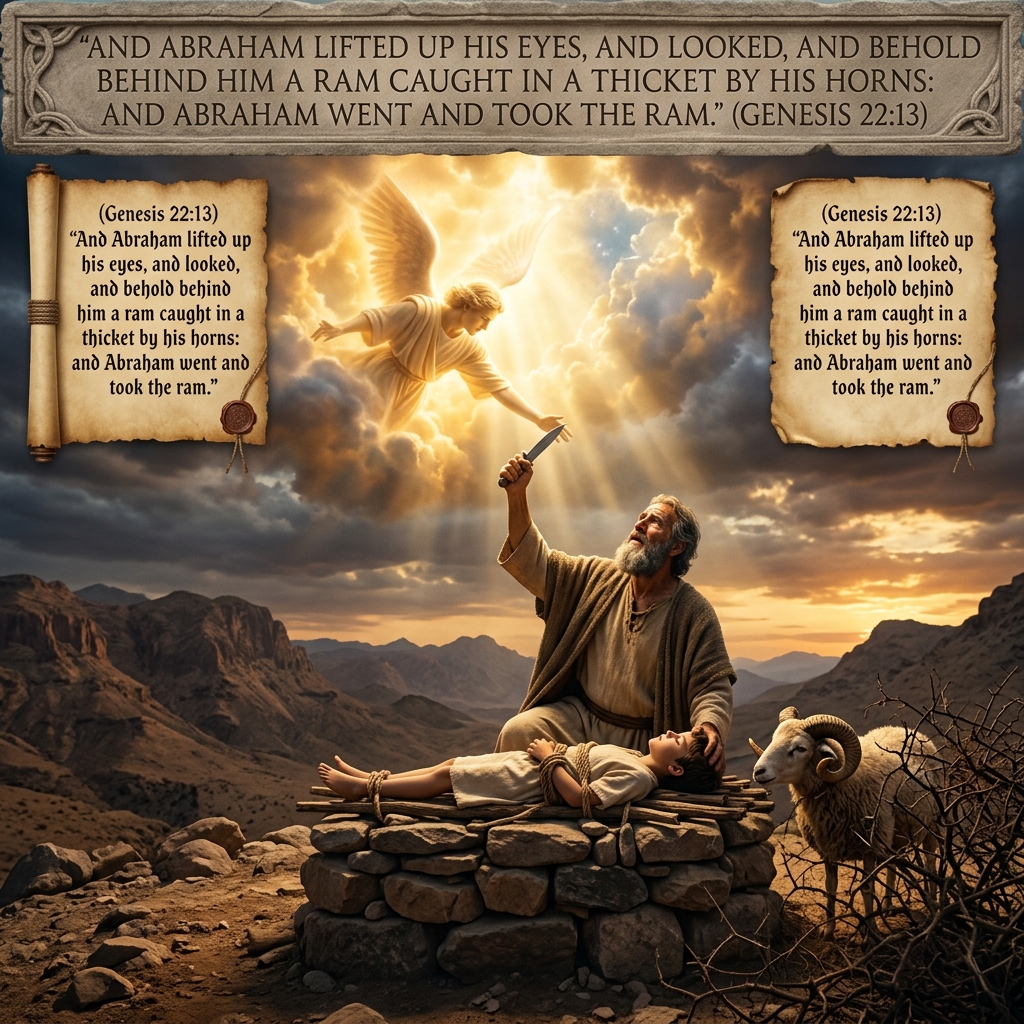
Surrendering Disappointment to the Sovereign Savior
Furthermore, the Apostle Paul unequivocally testifies to Christ’s impeccable holiness, writing in 2 Corinthians 5:21, "For he hath made him to be sin for us, who knew no sin; that we might be made the righteousness of God in him" (KJV). This powerful declaration reveals the glorious exchange at the heart of the Gospel: our sin is imputed to Christ, and His perfect righteousness is imputed to us. Jesus, who was utterly without sin, became the ultimate sin offering, bearing the full wrath of God against sin on the cross. He did not become sinful, but He was treated as if He were, so that we, who are sinful, might be treated as if we were righteous.[8]
This divine transaction underscores the profound truth that forgiveness flows from Christ to us, never the other way around. He is the source of all pardon, the one who initiates reconciliation and extends grace to a fallen humanity. When we grapple with feelings of disappointment or hurt, even those directed towards God, our true need is not to 'forgive' Jesus, but to deepen our understanding of His sovereign love and perfect wisdom. Our finite minds cannot always comprehend the infinite tapestry of His plan, but we can trust in His unwavering character. Instead of seeking to pardon Him, we are invited to surrender our pain and confusion to Him, allowing His peace to guard our hearts and minds.
The freedom we seek from our spiritual anguish is found in clinging to the truth of Christ's perfect nature and His finished work on the cross. He is our Redeemer, our Healer, and our Comforter. When we feel let down, we can bring those feelings to Him, not as accusations requiring His apology, but as expressions of our human frailty seeking His divine comfort and guidance. His grace is sufficient for every wound, every doubt, and every unanswered question, transforming our struggles into opportunities for deeper trust and more profound reliance on His unfailing love.[9]
For he hath made him to be sin for us, who knew no sin; that we might be made the righteousness of God in him.— 2 Corinthians 5:21, KJV
✨ What To Do Today
- Journal prompt: Reflect on a time you felt let down or disappointed by circumstances you attributed to God. How might understanding Christ's sinlessness and sovereignty reframe your perspective on that experience?
- Scripture meditation: Meditate on Hebrews 4:15 and 2 Corinthians 5:21. How do these verses deepen your appreciation for Christ's perfect sacrifice and His role as your High Priest?
- Practical step: When feelings of hurt or confusion arise, consciously redirect your thoughts from 'forgiving God' to 'receiving God's comfort and understanding.' Speak aloud a prayer of surrender and trust.
- One act of surrender: Surrender any lingering resentment or misunderstanding about God's ways, trusting that His plans are always good, even when they are beyond your current comprehension.
In the tapestry of God's redemptive plan, the truth of Christ's sinless perfection shines as a beacon of hope and assurance. We are not called to forgive the One who perfectly fulfilled the Father's will and bore our sins, but rather to embrace the glorious freedom He offers through His sacrifice. May your heart find rest in the unwavering truth that Jesus is forever worthy of all praise, and His grace is eternally sufficient for every one of your needs. As you walk forward, may you live in the liberating reality of His complete forgiveness, knowing that in Him, you are fully known, fully loved, and eternally secure, not by your works, but by His finished work on the cross.
Footnotes
- Everett Ferguson, Backgrounds of Early Christianity, 3rd ed. (Grand Rapids: Eerdmans, 2003), 119–122.
- D. A. Carson, Matthew, in The Expositor's Bible Commentary, vol. 8 (Grand Rapids: Zondervan, 1984), 404–406.
- John Chrysostom, Homilies on the Gospel of Matthew, Homily 61, in Nicene and Post-Nicene Fathers, First Series, Volume 10, ed. Philip Schaff (Grand Rapids: Eerdmans, 1980), 376.
- Leon Morris, The Gospel according to Matthew (Grand Rapids: Eerdmans, 1992), 471–472.
- Craig S. Keener, A Commentary on the Gospel of Matthew (Grand Rapids: Eerdmans, 1999), 456–459.
- John Calvin, Commentary on a Harmony of the Evangelists, Matthew, Mark, and Luke, vol. 2, trans. William Pringle (Grand Rapids: Baker, 2009), 384–387.
- St. Augustine, Sermons on Selected Lessons of the New Testament, Sermon 83, in Nicene and Post-Nicene Fathers, First Series, Volume 6, ed. Philip Schaff (Grand Rapids: Eerdmans, 1980), 362.
- Louis Berkhof, Systematic Theology (Grand Rapids: Eerdmans, 1996), 337–339.
- Leslie Vernick, The Emotionally Destructive Marriage (Waterbrook Press, 2013), 145.