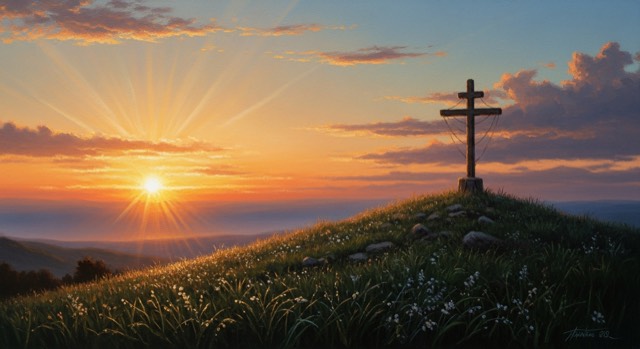
There is a vast, eternal chasm between religion and the Gospel. Religion is man's tireless, exhausting attempt to climb the ladder of self-righteousness to reach God. The Gospel, however, is the beautiful reality of God reaching down to rescue helpless sinners through the finished work of Jesus Christ. One is a burden of endless performance; the other is a message of complete liberation.
There is a vast, eternal chasm between religion and the Gospel. Religion is man's tireless, exhausting attempt to climb the ladder of self-righteousness to reach God. The Gospel, however, is the beautiful reality of God...
- The Fragile Structure of Human Effort: Trusting God's Word through life's deepest trials and seasons of waiting.
- The Offense of Free Grace: Trusting God's Word through life's deepest trials and seasons of waiting.
- Resting in the Finished Work of Christ: Trusting God's Word through life's deepest trials and seasons of waiting.
The Fragile Structure of Human Effort
Throughout the New Testament, we see the religious leaders of the day utterly offended by Jesus. They had kept the rules, they had meticulously guarded their traditions, and they had built a fragile structure of righteousness based entirely on human effort. But their religion simply couldn't handle a God who came down to them—a Savior who offered a real relationship instead of a sterile rulebook.
They weren't angry about bad works; they were furious about who He is. The real offense wasn't His actions; it was His identity. It was an identity that instantly made all their religious scorekeeping completely worthless. When God incarnate stands before you offering free grace, your ledger of personal achievements is revealed to be nothing more than filthy rags.
The Offense of Free Grace
Why does the human heart naturally prefer religion over the Gospel? Because religion feeds our pride. It allows us to boast in our achievements, our devotion, and our moral superiority. The Gospel, on the other hand, strips us of our self-sufficiency. It forces us to admit that we are spiritually bankrupt and entirely dependent on the mercy of another.
"For by grace are ye saved through faith; and that not of yourselves: it is the gift of God: Not of works, lest any man should boast." — Ephesians 2:8-9
To the religious mind, this is deeply offensive. It means the moral elite and the broken sinner stand on the exact same level ground at the foot of the cross. Salvation cannot be earned, bought, or bartered for; it can only be received as a free gift.
Resting in the Finished Work of Christ
The fundamental difference between religion and the Gospel can be summarized in two words: "Do" versus "Done." Religion says, "Do this, and you shall live." The Gospel says, "It is finished." On the cross, Jesus paid the debt of our sin in full, satisfying the righteous demands of God's law.
"Not by works of righteousness which we have done, but according to his mercy he saved us, by the washing of regeneration, and renewing of the Holy Ghost;" — Titus 3:5
We do not work for our salvation; we work from our salvation. True Christian obedience is not a desperate attempt to earn God's love, but a joyful, loving response to the grace He has already poured out upon us. If you are tired of the endless cycle of religious performance, lay down your heavy burdens today and rest in the finished work of Jesus Christ.