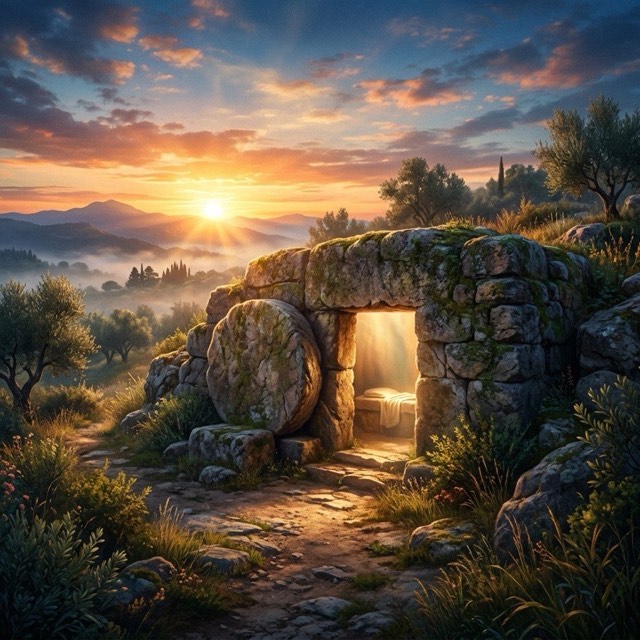
The Bible does not forbid cremation, but it emphasizes the hope of resurrection. Scripture teaches that God will raise believers from dust to glory (1 Cor. 15:42 KJV), so whether a body is buried or burned, our confidence rests in Christ’s promise of new life beyond death and the eternal peace He provides.
May 7, 2026 · Grace Notes Ministries
Grace — Faith Companion
Grace Notes Ministries · May 7, 2026
Comfort in the Ashes
When loss strikes, the mind often races with questions about the body and the soul. You may be wrestling with what the Bible says about cremation, fearing that fire might hinder God’s power to restore. Please hear this truth from the heart of Christ: your dignity in eternity does not depend on the state of your physical remains.
Jesus reminds us in the parable of the wedding feast, 'For many are called, but few are chosen' (Matthew 22:14). His focus is never on the vessel, but on the garment of righteousness He provides. Whether your loved one was buried or returned to dust, Christ sees them not by their earthly form, but by His redeeming grace.
Do not let cultural confusion steal your peace. The God who spoke galaxies into existence is not limited by fire or soil. He who said, 'Neither do I condemn thee: go, and sin no more' (John 8:11) offers the same mercy to those who have passed through the fire.
For many are called, but few are chosen.— Matthew 22:14, KJV
The Promise of Resurrection
It is natural to worry that cremation might complicate the resurrection, but Scripture assures us otherwise. The apostle Paul writes that we will be changed, and our 'corruptible' bodies will put on 'incorruption' (1 Corinthians 15:53). This transformation is a work of divine power, not biological continuity.
Jesus is the 'light of the world' (John 8:12), and in His light, the darkness of death holds no secret. He who raised Lazarus from the grave can raise the most scattered atoms back together. Your faith is not in the preservation of the body, but in the preservation of the soul by Christ.
Let the Word of God anchor your grief. The Bible teaches that we are heirs of God and joint-heirs with Christ. This promise transcends the method of burial. God’s ability to redeem is infinite, and His memory of His children is perfect and enduring.
For the Lord himself shall descend from heaven with a shout, with the voice of the archangel, and with the trump of God: and the dead in Christ shall rise first.— 1 Thessalonians 4:16, KJV
You are held by a Savior who knows every hair on your head and every tear in your eye. Rest in the certainty that nothing, not even fire, can separate you from the love of God in Christ Jesus. He will wipe away every tear, and you will see Him face to face.
✝ Sister Grace's Pastoral Reflection
Grace and peace be multiplied unto thee in the knowledge of our Lord Jesus Christ. I have pondered thy article, “What Doeth the Bible Say Concerning Cremation,” and behold, its compass is well-set upon the very rock of resurrection hope.
First, let the Word declare plainly that Scripture commandeth no ordinance touching the manner of laying aside the mortal tabernacle. The Lord hath never bound His redemptive purpose to the preservation of clay; whether by earth’s quiet repose or by fire’s consuming hand, the dust of man remaineth within His sovereign keeping. Job cried out in the depth of sorrow, “Though after my skin worms destroy this body, yet in my flesh shall I see God,” and Paul doth assure us that the corruptible must put on incorruption, for our redemption awaiteth not the state of the grave but the voice of the Archangel (Job 19:26; 1 Corinthians 15:42-53).
Secondly, thy teaching commendeth itself by lifting the wounded soul from fear unto faith. Fire may reduce a frame to cinders, yet it cannot scatter the purposes of Jehovah. The same breath which breathed life into Adam’s nostrils can reassemble what time and flame have taken. Let the mourner therefore cast his heavy burden upon the Lord, for “He healeth the broken in heart” (Psalm 147:3). The Gospel of Grace standeth firm upon this truth: salvation resteth not upon the condition of our earthly dwelling, but upon the finished work of the Cross. Christ died for sinners while we were yet enemies; how much more shall He preserve that which His blood hath purchased!
Thirdly, the measure of true ministry lieth in whether a doctrine comforteth or condemneth. Thy words minister deep consolation, for they point the grieving eye toward Zion above and away from superstition’s chains. The believer’s hope is not in bones nor ashes, but in the Living God who conquereth death and holdeth all things fast.
Hear now, thou heavy-laden heart: come unto Christ in the quiet of this hour. Lay thy sorrow at His feet, confess thy need, and trust wholly in His resurrection power. Let the altar of thine own spirit cry out: “Lord Jesus, I believe in Thee; raise me up at the last day. Keep my spirit safe till that morning, and receive me into glory. I cast every fear of the grave upon Thee; Thou art my Resurrection and my Life. Amen.”
The grace of our Lord Jesus Christ be with thy spirit, and peace from God our Father. Go forth in confidence, for neither death nor fire can separate thee from His love. Walk therefore in the light of this blessed assurance, and let thy life proclaim His mercy till thou standest before Him.
The Bible does not forbid cremation; it points to resurrection (1 Cor 15:42 KJV – "So also is the resurrection of the dead; it is sown in corruption, it is raised in incorruption.")
Is cremation considered a sin?
Cremation itself is not labeled a sin in Scripture; the focus is on faith in Christ and the hope of resurrection, not the method of body disposition.
What comfort does Scripture offer to those who choose cremation?
Scripture assures believers that God cares for their bodies (Matt 10:29‑31) and promises eternal life, offering peace regardless of earthly burial or cremation.
How does the doctrine of resurrection relate to cremated remains?
The resurrection promise (1 Cor 15) applies to the spirit and soul; physical form, whether buried or cremated, will be transformed into a glorified body.
Can Christians be buried or cremated according to personal conviction?
Christians may choose burial or cremation based on conscience and cultural context, provided the choice honors God and reflects confidence in Christ’s resurrection.